
Controller Technology Museum

Exhibit One · Analog sticks

How the analog stick learned to read your thumb

Five landmark controllers, from rubbing contacts to two generations of magnetic sensing.

01

There is a particular kind of magic in making a game character walk instead of run. You barely lean your thumb. A racing line tightens. A camera eases around a corner. A character approaches a ledge one careful step at a time.

A directional button reports a binary state. An analog stick reports distance and direction hundreds of times a second.

The stick turns thumb position into direction and speed.

Four milestones, then what’s coming

1982Atari 5200 Controller1996Nintendo 64 Controller1997Sony DualShock1998Sega Dreamcast ControllerWhat’s comingGenki Manta

Milestone 1

1982

The stick becomes proportional.

Museum object 01Atari 5200 ControllerPotentiometer joystickEarly home-console analog landmark

What players noticed

Games could receive degrees of movement instead of only eight digital directions.

Milestone 2

1996

Motion becomes countable.

Museum object 02Nintendo 64 ControllerOptical encoderMainstream 3D-control landmark

What players noticed

In Super Mario 64, a slight tilt made Mario walk; push farther and he ran. Speed and direction lived in the same gesture.

Milestone 3

1997

Two sticks become a language.

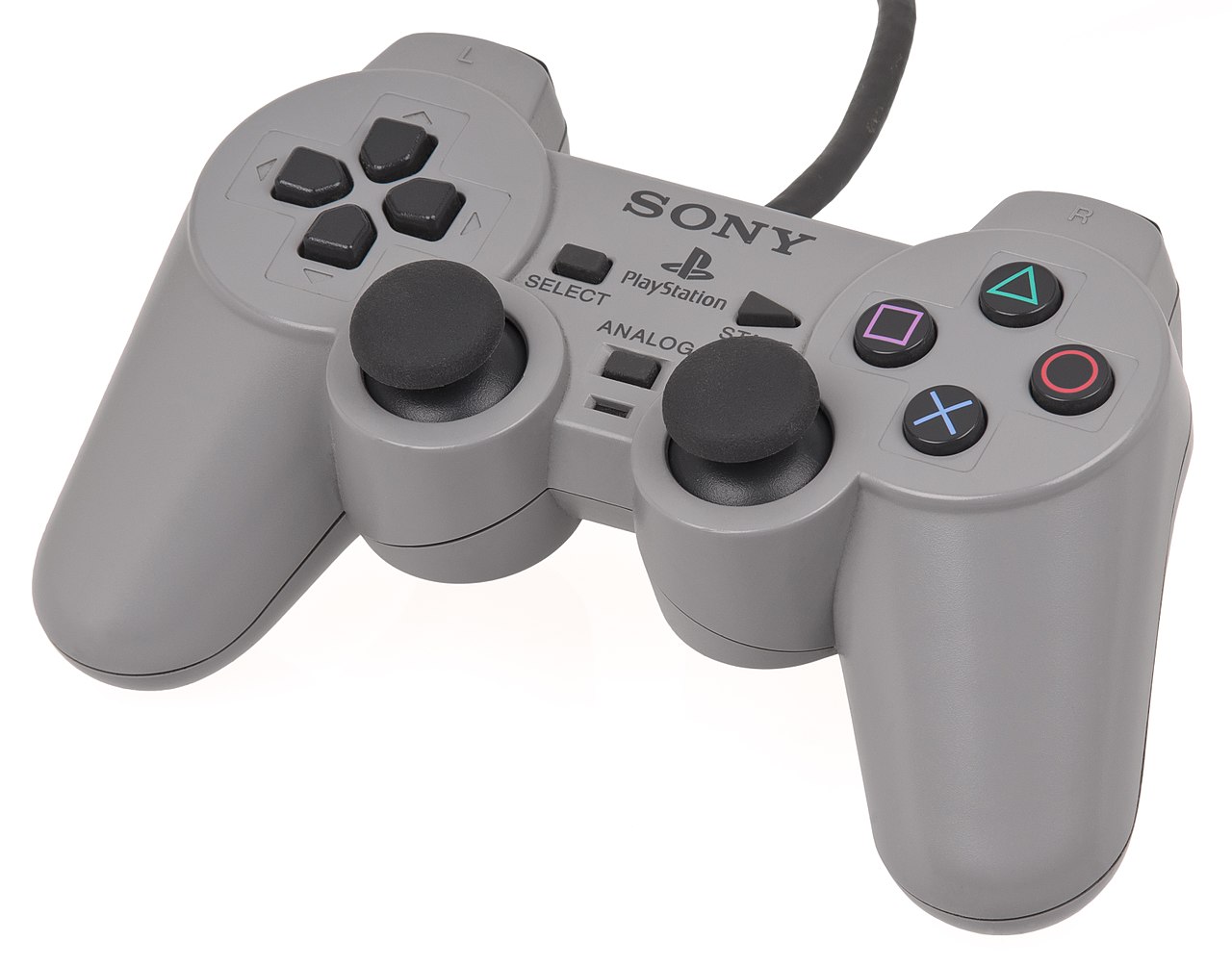
Museum object 03Sony DualShockTwin-stick controlTwin-stick control-language landmark

What players noticed

Ape Escape required the DualShock and built actions around both sticks. The second stick became essential to play.

Milestone 4

1998

The stick becomes contactless.

Museum object 04Sega Dreamcast ControllerHall effect sensingMainstream Hall-effect landmark

What players noticed

Contactless magnetic sensing shipped inside the standard controller included with every Dreamcast, long before Hall effect became a feature printed on gamepad boxes.

Technology comparison

Four ways to turn thumb movement into coordinates

These landmarks mix two kinds of progress: how motion is measured and how players learned to use it. Put side by side, they show why a sensor name never describes the whole stick.

011982

Potentiometer joystick

Atari 5200 Controller

How it works

Two moving contacts slide along resistive tracks. One measures horizontal position and the other measures vertical position. The console reads the changing electrical values as X and Y coordinates, like two dimmer switches mounted at right angles.

Its boundary

The original stick did not spring decisively back to center, and moving electrical contacts could become unreliable.

021996

Optical encoder

Nintendo 64 Controller

How it works

The stick turns two slotted wheels. Light passing through those slots produces pulses at optical sensors. Counting the pulses reveals how far each axis moved. Old ball mice used the same principle.

Its boundary

The sensor avoided friction, while the plastic gimbal, bowl and gears still wore down. Well-loved sticks became loose.

031997

Twin-stick control

Sony DualShock

How it works

Two thumbsticks provide four continuous axes. Over time, one convention won: the left thumb moves the body while the right moves the camera or aim.

Its boundary

The control language advanced faster than the common sensing technology beneath it. Potentiometer tracks, springs, calibration and debris could still contribute to unreliable centering.

041998

Hall effect sensing

Sega Dreamcast Controller

How it works

A magnet moves beneath the stick. Hall elements on the circuit board produce changing electrical signals as the magnetic field shifts. The controller calculates position without a resistive wiper scraping a track.

Its boundary

Hall sensing removes the wearing electrical contact. Centering, gimbal friction, calibration, dead zones and firmware still depend on the rest of the stick.

What’s coming

Manta’s current approach

Our current direction is Float-Tension Adjustable TMR: continuously tunable physical resistance, contactless magnetic sensing and a silicone contact ring for a smoother edge of travel.

What’s coming

In development

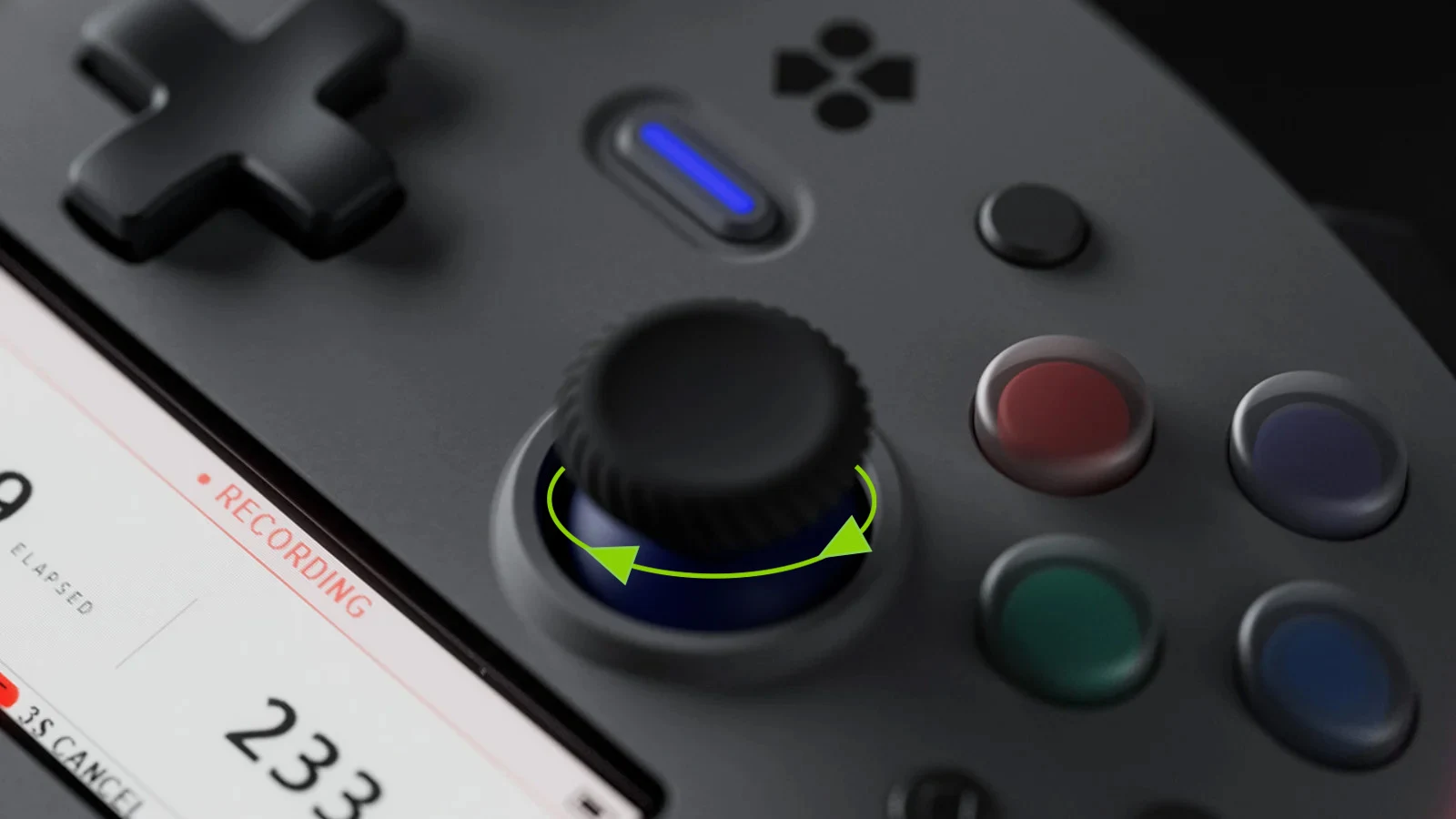
The mechanical feel becomes tunable.

Museum object 05Genki MantaFloat-Tension Adjustable TMRGenki development preview
Close view of a Genki Manta joystick with green arrows showing it twisting left and right
Photo: Genki · 2026 development hardware

What it changes

Physical tension and digital response become separate choices: tune the resistance by hand, then use MantaOS to adjust dead zones and response curves for either stick while viewing its input live.

Our approach

TMR, short for tunneling magnetoresistance, is a newer way to read a magnetic field. Hall sensors produce a voltage as the field changes. TMR sensors measure changes in electrical resistance across thin magnetic layers, providing a strong, precise signal without a resistive wiper. Manta combines that sensing with a stick that twists through 320 degrees to adjust tension from 30 gf to 80 gf. A silicone contact ring gives the stick a controlled glide around the gate.

Exit plaque

Modern sticks combine mechanical tension, a gimbal, position sensing, calibration and game code. Changing any one part changes the feel.

01The stick becomes proportional02Motion becomes countable03Two sticks become a language04The stick becomes contactless05The mechanical feel becomes tunable

Curator’s sources

Read past the plaque

  1. Atari 5200 Field Service Manual
  2. Nintendo hardware history
  3. N64 optical mechanism patent literature
  4. PlayStation history: DualShock
  5. Sega: Dreamcast controller and 1998 debut
  6. Sega: Dreamcast controller lineage
  7. Dreamcast Hall-effect joystick patent reference
  8. TDK: TMR angle sensors
Exhibit 02 opens Sunday, August 16 at 7:00 AM PDTFeel