
Controller Technology Museum

Exhibit Four · Triggers

How a shoulder button learned more than on and off

From digital commands to analog travel, a click at the bottom, and sensing with nothing touching.

04

A face button is usually a decision. A trigger can be a decision and a distance at once. That difference is why it became the natural home of acceleration, braking and careful aim.

Trigger history is a story of adding dimensions: first location, then travel, then a second signal waiting at the bottom of the pull, then sensing that never wears out.

Trigger travel lets one finger report anything between rest and full pressure.

Four milestones, then what’s coming

1990Super Famicom Controller1998Dreamcast Controller2001Nintendo GameCube Controller2024GameSir Tarantula ProWhat’s comingGenki Manta

Milestone 1

New actions move to the shoulders.

Museum object 01Super Famicom ControllerDigital shoulder buttonsShoulder-button landmark

What players noticed

More actions became available without asking the right thumb to leave the face buttons.

The mechanism

The button has two answers and nothing in between. Pressed or not pressed, decided the instant it bottoms out.

L and R are ordinary digital switches placed under the index fingers. Pressing one closes a circuit; releasing it opens the circuit.

What remained

The input still meant only on or off. A racing game could not distinguish a feathered squeeze from full throttle.

Milestone 2

A pull gains distance.

Museum object 02Dreamcast ControllerAnalog triggersAnalog-trigger landmark

What players noticed

Acceleration and braking could be gradually applied with one finger.

The mechanism

Now the trigger reports distance, not just yes or no. Half pulled is half throttle, which is why driving games felt different.

The trigger rotates through a range while a magnetic sensor measures its position. The game receives a continuum rather than a single switch state.

What remained

Long analog travel is expressive, but competitive actions may benefit from reaching their endpoint sooner.

Milestone 3

One trigger carries two signals.

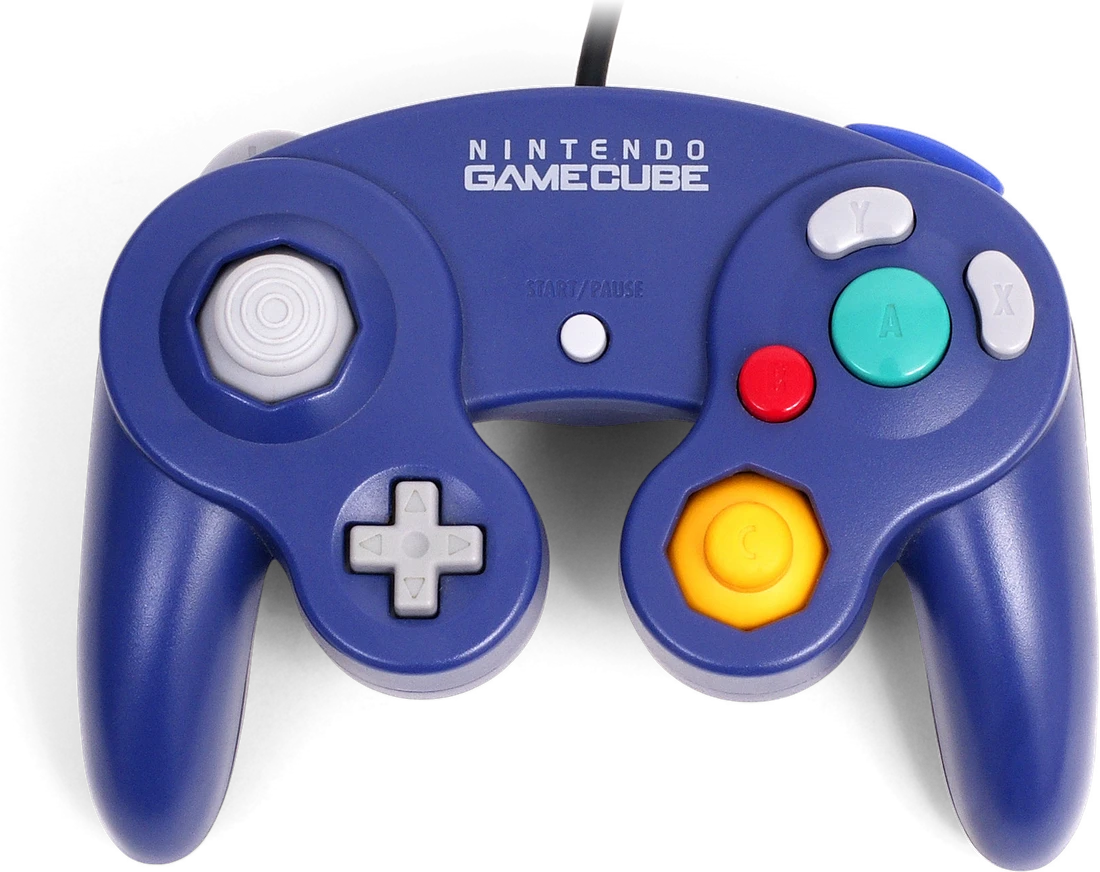
Museum object 03Nintendo GameCube ControllerAnalog trigger with a clickFirst mainstream two-stage trigger

What players noticed

A light pull crept forward or lined up a shot, and a full pull committed with a click you could feel arrive.

The mechanism

The trigger squeezes smoothly the whole way, then hits a switch at the very bottom. One finger, two separate signals.

The trigger slides through an analog range and then meets a switch at the very bottom. A game can read the gradual squeeze and the final click as two separate inputs from the same finger.

What remained

The click sat at one depth, chosen at the factory. A player who wanted it sooner, or not at all, had no way to move it.

Milestone 4

The trigger stops wearing out.

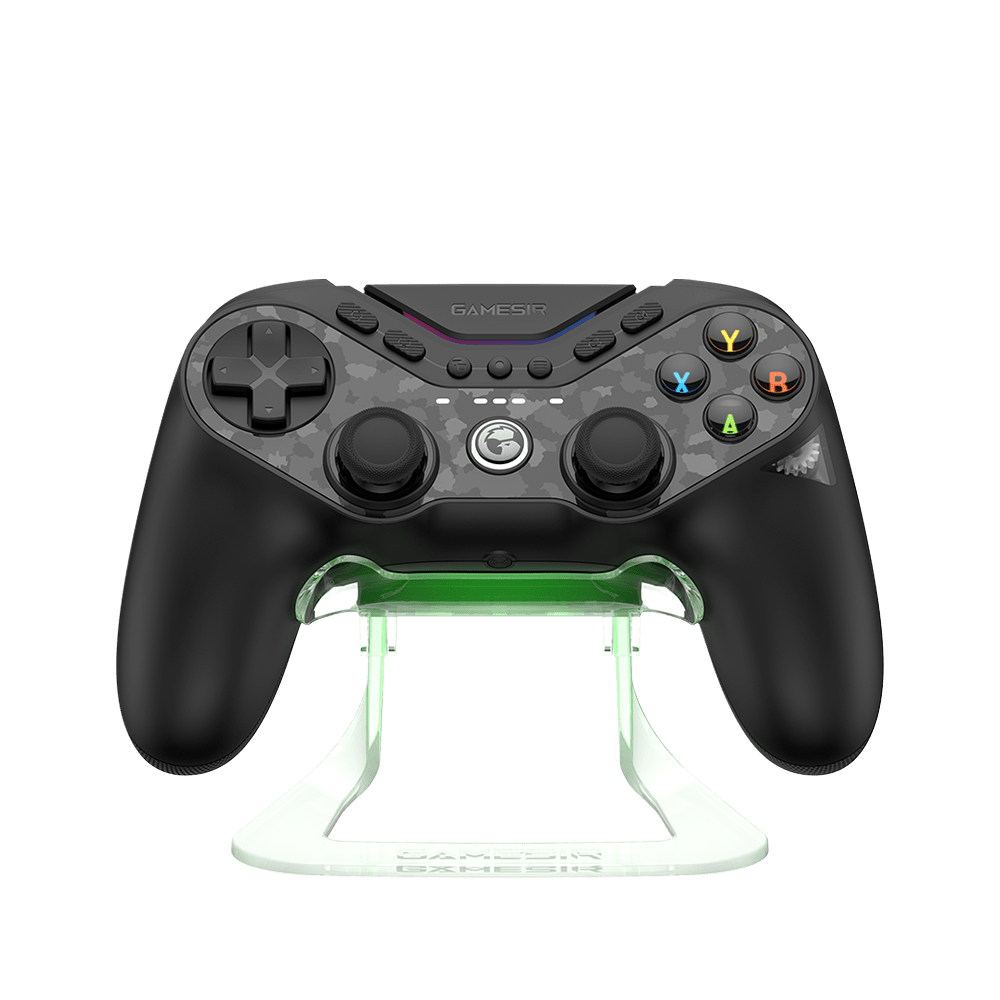
Museum object 04GameSir Tarantula ProHall effect trigger sensingContactless trigger sensing goes mainstream
GameSir Tarantula Pro controller
Product image: GameSir

What players noticed

Trigger response stayed consistent over months instead of drifting as the contact inside aged.

The mechanism

A magnet rides along with the trigger and the sensor reads it through thin air. No rubbing means nothing to wear out.

A magnet travels with the trigger while a sensor on the board reads the changing field from a distance. Nothing slides against anything, so the part reporting position never wears down.

What remained

Better sensing does not change what the trigger physically does. How far it travels, and where it stops, are still fixed by the shape of the parts.

Exhibit finale · TriStage Triggers

One trigger that stops making you choose.

Every trigger before it committed to a single answer: click instantly, travel far, or push back.

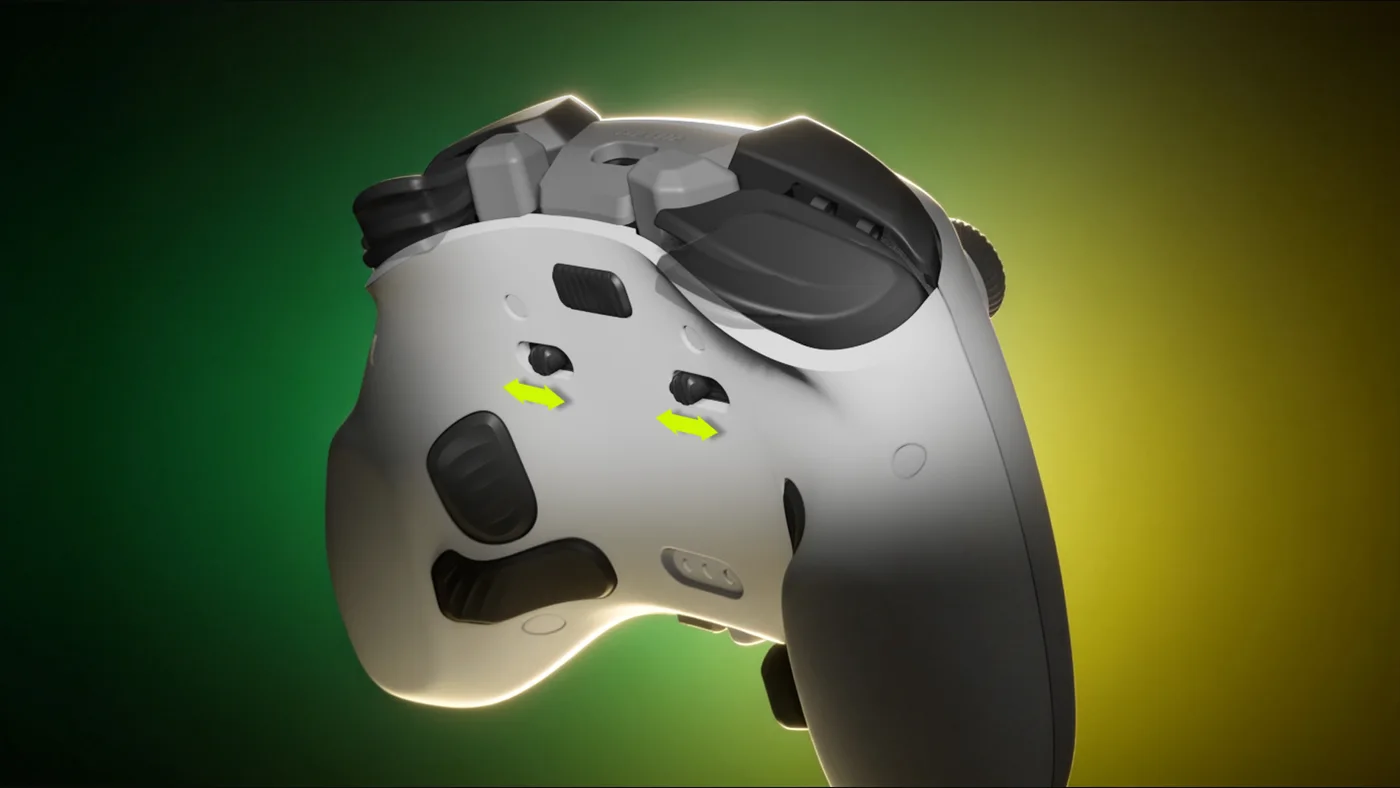
Museum object 05Genki MantaTriStage Triggers
Close view of a Genki Manta shoulder, showing the selector switch that sets the trigger stage
Photo: Genki · 2026 development hardware

What you’ll notice

The left and right triggers can use different modes at the same time: an instant click on one side, for example, and full proportional control on the other.

The mechanism

Slide the switch and the trigger physically changes character: a short click, a quick reset, or the full sweep for driving.

Three modes, one flip

Digital for a crisp click, Rapid for a short stroke, Analog for full proportional travel.

Different on each side

Left and right triggers can run different modes at the same time.

Rapid re-arms on the upstroke

Every repeated pull starts sooner and moves less.

Exit through the gift shop

Take Manta home

Everything this exhibit looks ahead to ships in one controller. Manta launches on Kickstarter Thursday, August 20 · 7:00 AM PT · 10:00 AM ET · 3:00 PM London · 10:00 PM Singapore. Follow the project and you’ll be notified the moment it, and the early-bird rewards, go live.

Follow Genki Manta on Kickstarter

Post card

Send this room to someone who would get it.

Curator’s sources

Read past the plaque

  1. Nintendo history: Super Famicom
  2. Sega Dreamcast hardware history
  3. Xbox Elite controller
Continue to exhibit 05Press